Thursday, December 27, 2012

Back On Rio Dulce

Daragh and Cathy Traveling On The Rio Dulce

Our travels from Providencia to Roatan with Daragh and Cathryn on Chantey V went exceedingly well.  We were very often out of sight, but never out of radio contact, and we arrived at Roatan together.  They are on a tight schedule as Cathy has to return to her teaching job in the fall of 2013, so they are trying to pack as much into two years as possible.

It is out of character for us to move at a fast pace, but we reached Honduras so much sooner than we expected that we decided to push on so we could spend Christmas in Guatemala with our old friends and new friends.  I do not mean we sailed fast, but just that we would not spend much time in Honduras.  After just three days in Roatan, Chantey V and Ariel departed for Utila.  We cleared Honduras in Utila and left there after just two days.  After an overnight passage, we were back in Guatemala.  When we left Guatemala the previous year, we did not expect to return with Ariel, but as we have mentioned many times before, our plans are always very flexible.  Besides wanting to be in Guatemala for Christmas, we also wanted to haul the boat to have the bottom painted.  We contacted friends at Catamarans Hotel and Marina to see if there would be space for us.  Catamarans are very difficult to get into as they do not accept reservations and are usually full.  It is also helpful to have a recommendation from someone already there, in our case, Iain and Jan from Jocks Lodge.  Catamarans did indeed have a side tie slot.  We were familiar with Catamarans, as even when we stayed at Monkey Bay just across the river, we would go to Catamarans on Sundays to watch football.  As expected, it felt like we were coming home, seeing all our friends and immediately getting reengaged with some of the many activities on the Rio Dulce.  Catamarans has a nice pool, so afternoons are spent hanging out by the pool with friends.

Dominos (Jan, Celine, Linda, and Suzanne)

On Christmas Day, a few of us decided not to go out to any of the several Christmas dinners, but instead gathered together, each bringing some (someone else's term) heavy hors d'oeuvres.  We had a wonderful time, with good food and good company.

Christmas Dinner Poolside


Iain's Birthday is on Christmas Day

We are scheduled to haul out at RAM Marina on January 3, so our rapid pace (not sailing) continues.  We will be back off the river before we know it.  Daragh and Cathy only planned about a month in Guatemala, so we would not be surprised to be sailing with them again.

Monday, December 24, 2012

Watercraft Of The San Blas

Excellent Sailor


Bringing Us Our Coconuts


Colorful Sail


Sunday, December 23, 2012

Coco Bandero Images

The Coco Bandero Cays were our favorite in the San Blas.  These small uninhabited islands are very scenic with white sand beaches and wonderfully clear water.  We enjoyed walking the island's perimeters along the sandy beaches.


These pictures are associated with the original posting date, 11/21/2012


Saturday, December 22, 2012

Nargana Images

Original Nargana posting dated 11/19/2012


Our Main Man - Federico


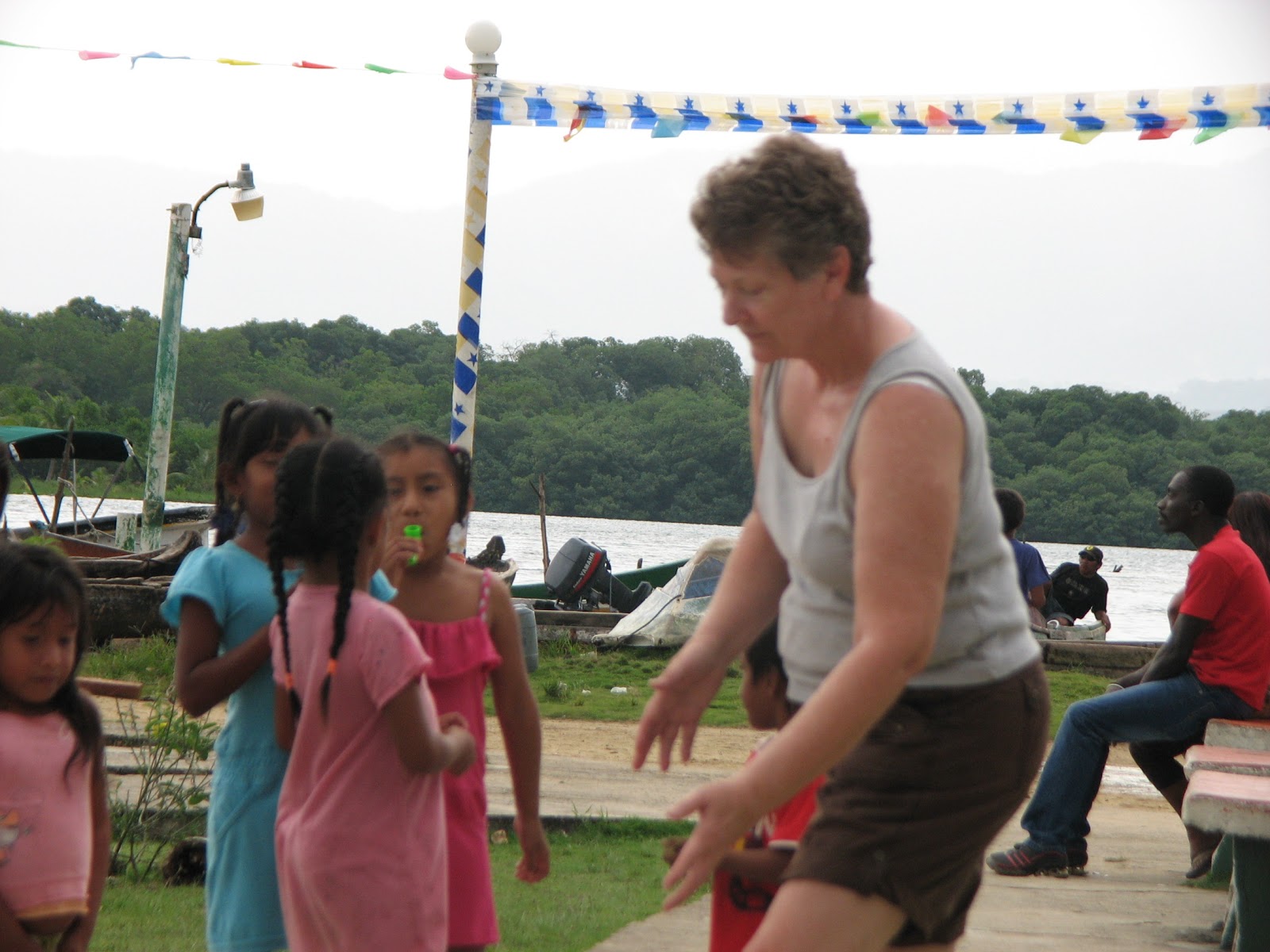
Playing With The Kids


Found My WiFi Spot

Friday, December 21, 2012

Molas

These are the pictures associated with the post dated November 15, 2012.

The mola forms part of the traditional costume of a Kuna woman, with two mola panels incorporated as front and back panels in a blouse. The full costume traditionally includes a patterned wrapped skirt (saburet), a red and yellow headscarf (musue), arm and leg beads (wini), a gold nose ring (olasu), and earrings, in addition to the mola blouse (dulemor).

In the Kuna's native language, "mola" means "shirt" or "clothing". The mola originated from the tradition of Kuna women painting their bodies with geometrical designs, using available natural colors; in later years, these same designs were woven into cotton, and later still, sewn using cloth bought from the European settlers of Panama.


Thursday, December 20, 2012

Portobello Photos

These are the pictures associated with the post dated November 6, 2012, which was posted via SSB radio and Pactor modem without attachments.

San Fernando Fort Battery (constructed in 1760)

San Fernando Fort Battery

San Fernando Fort Battery


Customs House (originally constructed 1630)

Wednesday, December 12, 2012

Passage To Roatan

The memories from last Christmas season came flooding back during our brief return visit to Providencia. Providencia is a very special place to us and to most cruisers who stop there. Very few people find their way to Providencia, so it remains very much an unspoiled island community. We quickly got back into the Christmas spirit as they have music and organized activities going on almost every evening. It was wonderful to see people we met last year and to see familiar faces, and to see the recognition on their faces as they recognized us. We rented a mule for the day. It is a golf cart-sized utility vehicle. We used it to haul our jerry cans with diesel, but also to tour the island one last time.

A really good weather window came up, so we had to go on. Staying any longer for another window could have meant staying several weeks, and while that would be very agreeable with us, it was not in our plans.

Forward 911

Our first day out of Providencia, well off the coast of Nicaragua, the US Coast Guard ship Forward 911 came by to check us out. We first spotted them on the far horizon and watched as they made their way to our location, approaching from our starboard. We had previously heard them on the radio with Chantey V, a Canadian boat we were traveling with, but which was several miles ahead of us, so not visible. I hailed 911 as they approached to identify ourselves, and they had a few questions for us, which they spread out over about half an hour. They trailed behind us during this time, and then we saw them veer off to the right and guessed they were putting a launch in the water out of sight from us. Sure enough, they next announced we were to be boarded, and immediately their launch came around the stern of 911. The launch had eight persons aboard, of whom four came aboard for a safety inspection and a search. They were all very cordial and friendly, and we enjoyed their company. We do not mind boardings (this is our second) and appreciate all the Coast Guard does for mariners. It also gave us reassurance that they were in the vicinity of the coast of Nicaragua, which is one of the least safe places.


Our three-day, three-night trip could not have been better. The seas were fairly calm, and the sailing was good. Last night, the wind was directly behind us and very strong, so our issue was keeping the boat speed down. We arrived at 7am at French Cay Harbor right on our planned schedule.

French Cay Harbor is the place to be again for cruisers on Roatan. A new place, Brooksy Point Yacht Club, opened last Christmas as a cruisers club. It is a nice facility, and for a club fee of $15 per week, they have everything we could want, including WiFi, showers, Sky TV, coin laundry, a gathering place, and much more. It was set up by Mike, a cruiser who had to give it up for health reasons. We are almost tempted to stay here awhile, but we think we will keep pushing on, weather depending.

Friday, December 07, 2012

Weather Forecast ???

The problem with the weather is that it doesn't always adhere to the forecast. With very good conditions forecast, we made our decision to clear out of Panama. We actually cleared out on Tuesday with a planned departure on Thursday. Wednesday was the official Independence Day (from Spain) in Panama, although they moved the actual holiday to Monday for the long weekend. We didn't want to chance the government offices being closed on Wednesday, so we cleared early.

Typical House - This With Upgraded Roof - Location, Location, Location

Wonderful Sailors


On Thursday evening, thinking it was our last in San Blas, some guys came by with some very large lobsters, so we had lobster dinner, thinking, what a fitting ending to our short time in the San Blas. Well, Friday night we were still there, so we had pizza, which we decided was good comfort food before our long trip.

Lucky for us that our chosen waiting spot to depart, Chichime, was a wonderful location. We could have easily stayed for an extended period, but of course, when you have cleared out of a country, you are supposed to leave. The great-looking weather opportunity started to get pushed out and started to deteriorate a little. We decided to delay our departure til Friday morning. Friday morning, the wind had not abated, and the seas off San Blas were running six feet, so we decided to wait until later in the day. The winds blew steadily all day until around four, at which time they suddenly dropped to almost zero. The seas were still rough, so we again delayed until Saturday morning. During the night, the winds were calm, and upon waking Saturday morning, the seas looked good. As soon as we pulled anchor, the winds picked up again.

The wind direction for the entire trip was north-north-east east and our rhumb line was northwest, so we motor-sailed as close to the wind as possible and tried to get as much easting as possible in case the wind backed more to the north. The wind ranged between 15 to 25 knots the entire trip. We managed to gain about fifteen miles to the east, but in the end, we didn't need it, so the last few miles were a nice ride as we gave up the ground we had made.

Originally, with the good weather forecast, we had intended to go to Honduras, but here we are in Providencia. We like Providencia, so we are actually very pleased to be here. It was going to be hard for us to pass it up anyway. We are here with several boats that made the same journey as we did, but we were all spread out quite far from one another.

In the anchorage, we have two American boats (including us), two British boats, one Canadian, one French, and one New Zealand. 

So here we are, already studying the weather models for our next trip, also knowing the weather may not do as the models forecast.

Thursday, November 29, 2012

Veggie Boat

Our weather data started showing a very good-looking opportunity to travel north. It is a little sooner than we had planned to leave, but at this time of year, the opportunities can be somewhat rare. For the past week or so, there have been several boats stuck in Providencia waiting to go north or south, according to the circumstances of each. We remember last December, while we were in Providencia, when several boats were forced to stay there for several weeks. So with that in mind, we started working our way toward Porvenir to clear out of Panama and to stage our departure.

On the short sail from the Eastern Holandes to the Eastern Lemmon Cays, we heard on the radio that the 'Veggie Boat' was making the rounds in the Lemmon Cays. This was welcomed as great news, as the 'Veggie Boat' had not been around recently, and most people were now resorting to canned goods. This was to be our first (and only) 'Veggie Boat' experience. We arrived on time, and after waiting patiently, we got our chance. People buy a lot, and he visits every boat, so it takes a long time to make the rounds. The wait was worth it because the quality and selection were the best we have seen in Central America. They have obviously figured out what cruising boats want. We bought a wide selection.

On the subject of food, we do eat well on Ariel. Linda has become very expert at provisioning and planning a varied menu. This is very challenging as she needs to buy for several weeks in advance, often at stores with a much limited selection.

The Eastern Lemmons was much more crowded than we had expected, but we found a nice spot and enjoyed a wonderful evening. The next day, after a couple of showers passed our area, we went on to Porvenir, cleared out, and got our Zarpe from the Port Captain and cleared with Immigrations. We did not stay in Porvenir as it was very rough in the anchorage. We moved on to Chichime. These cays are very far out on the bank and a good departure point. We are between a couple of cays that are lightly inhabited, each with three or four little homes. Like most cays, there is no electric power, and the only lights at night are from the anchored boats. We have been visited by several of the local residents wanting to sell fish or their handmade items. We weren't interested in buying anything.

This is a great location for our final nights in the San Blas.

Friday, November 23, 2012

A San Blas Thanksgiving

On Thanksgiving Day, we moved from Coco Bandero Cays to the Holandes Cays. Along the way, we caught a pretty good-sized fish, which was our hope, so we could have a special Thanksgiving Day meal. There are relatively few United States-flagged vessels here, most seeming to be from European countries, so it seemed a little different. There was no chance for turkey, and all that goes with it, as getting even bare essentials here is difficult, so fish cooked on the grill was a great substitute. We are certainly thankful for all our blessings, no matter where we are. The Holandes Cays are the furthest from the mainland, and therefore, they have the clearest water. We are anchored in thirty feet, but the bottom is quite visible. These cays are protected by a large and wide reef, so while the surf is crashing nearby, it is peaceful on our side of the reef.

We are checking the weather closely now, looking for an opportunity to sail to Providencia, Colombia. Some may remember we spent most of last December in Providencia, including Christmas. It is a two-day, two-night trip from here, so we need a pretty decent window. There will be a few boats leaving once the window opens up, so we will have company along the way.

Wednesday, November 21, 2012

Coco Bandero Cays

We are now in the Coco Bandero Cays, and this, so far, is the most beautiful place we have been in the San Blas. We keep extending our stay here, but there is more to see, so eventually we will have to let go. We can't post a picture, but if you look up 'The Panama Cruising Guide' 4th edition, by Eric Bauhaus, the cover photo (if shown on the net) is the Coco Bandero Cays. The guide, by the way, is the best cruising guide we have used anywhere. We are anchored among several very small cays, each totally rimmed with sandy beaches and covered with coconut palms. We exercise by walking the perimeters of the cays.

We are anchored in a spot popular with the pelicans, so in the late afternoon, we are entertained watching them dive for their supper. I have taken to rating their dives, just like the Olympic diving judges, especially if two or more dive together, so I can rate the synchronized diving.

Somewhere along the way, we picked up a gecko, probably during the summer at Red Frog. He is very shy, so we don't see him often, but we do find his droppings. That is the one downside of geckos on board. The other morning, we found he had helped himself to our tomatoes that we had left out.

Speaking of wildlife, we did see a crocodile while anchoring at Nargana, and a good-sized one at that. We had been hoping for a sighting. We have also seen sea turtles, rays, dolphins, and the beaches where we are now have plenty of starfish.

A part of our watermaker failed, and it cannot be repaired until I can get a replacement. We are now collecting rainwater to meet all of our water needs. So far, there has been plenty of rain, so we are doing well in that regard.

Posted from Coco Bandero Cays

Monday, November 19, 2012

Nargana Experiences

Most of the inhabited islands of Kuna Yala, particularly to the west of our current location, are traditional, meaning they live as they have for hundreds of years, foregoing modern conveniences such as electricity. We have spent a few days at Nargana Yandup, here primarily because we can get internet and basic stores. We had no sooner anchored before we were approached by a cayuco. Federico introduced himself, and he is the one person we were hoping to meet in Nargana. Federico is a guide but also can take care of all of our needs ashore. We sent him off with our laundry and trash. We later found out how important Federico would be as wandering the very small island, we couldn't seem to find the tiendas, as advertising is not necessary in such a small village. At the school, we were told the internet was broken. A little later, stopping for a couple of cokes at a small shop, we found they were surprised to hear the internet was broken and suggested it was only available in the afternoon, and we probably misunderstood. Back in the afternoon, I talked to a teacher who confirmed it was indeed broken. I only know this because I heard the word modem and then confirmed it could be weeks before it would be repaired. I also found out that the next island, Corazon de Jesus, has internet. This island is connected to Nargana by a pedestrian bridge. I set off across the bridge, not sure what I was looking for, but on the bridge saw a teenager with a notebook computer and asked. He said the whole island has WiFi. Spirits lifted, I just needed to find a shady spot. I stopped at a pool hall (doesn't seem to fit the image, right?) bought a beer, and logged on. One hour and two beers later, all I had managed was to access our emails. It is free, but way too slow for any useful purpose. The next day, we retrieved our laundry and then sent Federico off to get us some diesel fuel. Later, I went and got in line at the bank to try and get some more cash. It was a long line, always outside in this part of the world, as they control the number of people inside. After about an hour, I got my turn at the teller to find out that this branch is not capable of giving me cash on my card. We are not short on cash, so it is not a big deal. Later in town to try the internet again, we ran into Federico and asked him to show us the tiendas. He took us to four different ones, and we bought some fruit and vegetables, but none of them were very large, and they carried very little. The timing was right as the supply boat from Colon had just arrived, so he took us down to the town dock, where we bought five pounds of ground beef off the supply boat ( $12.50). The internet still wasn't any faster; in fact, I got nothing done, so I decided to try very early in the morning. While I sat in front of the pool hall, waiting for the internet and trying to chat with the locals, Linda was out distributing small toys to the kids. She returned with the pack of them, and I safeguarded my computer. I have learned that kids love to reach out and push a key or something, and I didn't want anything to disturb my nonexistent internet session. The people here are just wonderful. We have never in all our travels met a friendlier people. While most of the people in Nargana have given up the traditional dress, there are still many women who wear the traditional clothes with colors that are so bright and vibrant. There is a mixture of homes on the island, probably about one half are the traditional stick homes with thatched roofs, and the rest are poured concrete with tin roofs.

I finally got high-speed internet. I went into the village square, where the signal seemed the strongest just after daybreak, before many people were stirring. I couldn't believe the difference. I was able to get some bill paying done and set up some of our weather data emails, which we will be needing. Pictures will have to wait for a better opportunity.

Posted from Coco Bandero Cays

Thursday, November 15, 2012

San Blas Adventures

Each day is a new adventure. During our first full day in the San Blas, after we had settled in at Lemmons Cays along with another 7 or 8 boats, a guy came by with a bin full of molas, so we invited him aboard and spent about 1 ½ hours trying to narrow our selection down. They were of very good quality, which is why we invited him aboard. We finally settled on a few molas and are happy with our purchase. A mola is actually part of a woman's blouse, but has become an art form and is Panama's best-known handicraft. They are made by cutting and stitching different layers of cloth. Actually, it is too difficult to describe.

The next day, Lisa stopped by and introduced herself. She came during a light rain, so we had a good excuse not to invite her aboard. We had heard of Lisa long before arriving in the San Blas. Lisa is an infamous transvestite who does very well at promoting herself. Later in the day, a family stopped by that wanted to sell lobsters. They were too small, so we rejected them, and hopefully, all cruisers will reject undersized catch. Next, the woman offered a mola, but it was of poor quality, so after we said no to that, they asked for candy for the child, at which point we sent them on their way.

The following day, we moved to Salardup and for the first time had the anchorage to ourselves, but we also noticed a couple of huts behind a very beautiful sandy beach at the tip of the island. Late in the day, a couple of guys from the island paddled out in their cayuco. The native language is Kuna, with Spanish as a second language. One of the guys spoke Spanish and absolutely no English. After a long, struggling conversation, we realized they wanted gasoline so they could travel to one of the populated islands closer to the mainland. We agreed to give them a couple of gallons in exchange for a couple of coconuts. Coconuts are very important to the Kuna and a big part of their economy. We have been enjoying the best coconut we have ever had. We determined that one of these guys owned the island or at least his family does, and they are running a day trip tourist stop, or at least trying to. The next morning, before we got underway, they passed us on their way in toward the mainland.

Also, the next morning, before we got underway, Lisa stopped by again. We explained we were just getting underway, so we did not want to look at molas. When we arrived at our next stop, Green Island, Lisa was on a catamaran showing them molas, and by now we are old friends, so of course we exchanged waves with her. Just after we got settled on the anchor, a couple of guys stopped by selling lobsters, so we bought some. These seemed legal size, but certainly not what we would term grande, which is how they referred to the ones we selected.

Wednesday, November 14, 2012

Arrived San Blas

We had observed while waiting behind Isla Linton for good weather to complete the last leg of our trip to the San Blas that our weather data was not matching the conditions we were seeing. We began to wonder if being situated near the steep hills and mountains not far away was creating some localized effects. We were rocking horribly at anchor from incoming swell, so we decided to head out and see if we could tolerate maybe ten hours of what looked to be very rough and confused seas. Once out, we confirmed it was very rough, but we decided to go on. The wind was just enough off the nose that we could get the stay sail out, and that helped drive through the seas. It was what we call a washing machine ride, such as watching a cork bop around during the wash cycle of a top-loading machine. Our trip took just a little over eight hours, so not bad. The boat down below needed a lot of straightening out after we arrived, and we had a water mishap, which was a big surprise. We were running low on water, which influenced our decision to go, so we ran the watermaker for eight hours while underway, and we were really surprised to find we had a near-empty water tank once we got there. I probably hit the cold water faucet in the galley while below and being jostled around, and didn't notice it, so we pumped just about all our water down the drain. We were so looking forward to those showers, too. We recovered quickly by opening the deck fill to the water tank, building a small dam, and began collecting rainwater. By morning, we had a 1/8 tank, good enough for coffee and showers.

We stayed the night off Porvenir so that we could check in with the Port Captain in the morning. After checking in, we moved on a short distance to the Lemmon Cays. We have been blown away by the beauty and peacefulness of the San Blas, and we have yet to begin to really explore. We are now slowly working our way east toward Nargana. We have been without internet for two weeks now, and we understand we may be able to get internet at the school in Nargana. We did hear on the BBC the results of the election, but only because we made the effort; other than that, we have had no news, but we are not complaining. Being disconnected is nice once in a while.

Saturday, November 10, 2012

Weather Is In Control

I went in to see the Port Captain in Portobello on Tuesday morning, with hopes to get underway immediately thereafter. While in town, it began to rain, so I had to wait for a break before returning to Ariel. We put the dinghy away as soon as I got back, but then it began to rain again. Our planned destination was only about two hours away, so we decided we would just leave when it stopped. At 3 pm, we decided we would have to wait another day, not wanting to risk a late day or night arrival. The next morning looked good, so we were on our way. We had no sooner cleared the harbor, and the rain started in again and quickly became very heavy. We turned on the radar and navigated with it as visibility was very limited. The heavy rain continued unabated. We were approaching the point where we would turn in to go behind Isla Linton, our planned stop, and the rain was still not letting up. We decided we would go to that point and just hold there. Amazingly, at the exact moment we reached our turning point, the rain stopped completely. We went in and found a place to drop the hook. We didn't know what to expect, but certainly we were not expecting over 60 boats, but now that we have been here a while, we see it makes sense. A road runs nearby, where it is easy to get a taxi or a bus to Colon for supplies. We have seen several boats making major provisioning trips. It looks like an affordable place to hang out during the wet season. We had planned to leave the very next day, but the rains resumed and continued throughout the following day, dropping several inches. There are two seasons in Panama: dry and wet. The wet season runs from June through November, and since this is November, we were forewarned. The rain finally let up the following day, with just intermittent showers, and as much as we wanted to leave, we were now facing strong trade winds coming from the east, exactly the direction we needed to go. The weather is now beautiful, so we will just hang out and wait for a change in wind direction, now forecast for early next week. There is a large fish farm operated here and a small village. We went in to check it out and found a small tienda, so we picked up a couple of grocery items. Just 40 more miles and we will be in the San Blas.

Tuesday, November 06, 2012

Travelling To Portobello

Our trip from Bocas del Toro to Rio Chagras is indeed memorable. We arrived safely, but it is not an experience we hope to repeat. We left Red Frog anchorage in a slight drizzle, but that is to be expected in Panama. So after getting out into the open water, we were able to get sails up and had a nice reach for a couple of hours before a distant squall disrupted the winds. We expected that once we got further along, the winds would resume as they were, but they were no longer usable and remained that way the remainder of the trip. We had a very favorable current, so we were not burning much fuel as we worked our way toward our destination. The afternoon was pleasant but very cloudy, and some thunder could be heard in the distance. We had been hoping for a moonlit night, but with the heavy cloud cover, we started seeing that chance fading away. Neither of us are big fans of overnight passages, but it is necessary for what we do. It will take ten or more overnights to get Ariel back to Key West, but we will deal with that at some future point. At about midnight, the rain started, and it lasted until 3 am, sometimes light and at times quite heavy. We had part of our enclosure up, so we were relatively dry, and amazingly, there wasn't any strong wind with the rain. The lightning also started around the same time, and it lasted until 5 am. During the night and well before the storm, we saw only two ships, the closest a little more than six miles. So during the lightning, we were the only object on the sea, both visually in all directions and according to radar. With a mast pointing to the sky, all we could do was pray and keep plodding along since it was out of our hands. Much of the lightning was cloud-to-cloud, but we did see strikes down to the water. As it was, we did not have any strikes close by, and we are thankful for that. We were approaching our destination, the Rio Chagras, as the morning welcomed us. We entered the Rio Chagras but proceeded only far enough up the river to get beyond the effects of the incoming surf. The Rio Chagras is a beautiful tropical river surrounded by virgin rainforest. The river was dammed about six miles inland in 1910 to form Lake Gatun, which supplies water for the Panama Canal locks. The river is about 30 feet deep from shore to shore, and the water is clear. We anchored in the center, and we no sooner settled when we heard the familiar howler monkeys. Later, the green parrots kicked up a racket. There were dozens upon dozens of them, maybe a hundred so in the trees on both shores and crossing from one side to the other, usually traveling in pairs. They are beautiful to watch, but the noise can be irritating after a while.

After a comfortable night, we continued on the next morning, crossing through the anchorage at the entrance to the Panama Canal, with many ships waiting their turn. We arrived in Portobello in the early afternoon, surprised at the number of cruising boats anchored. I counted about fifty. We planned to stop in Portobello as one last opportunity to provision before heading to the San Blas. Portobello was discovered by Christopher Columbus on November 2, 1502, on his fourth trip to the New World. Between 1574 and 1702, fleets of galleons carried away the riches. The fortifications from that era are still present. One of the notable buildings in town is the Customs House, originally built in 1630. It was used as a trade warehouse and for the offices of the Governor. The other impressive structure is the Church of San Felipe de Portobello, home of the Black Christ of Portobello. Captain Jack's is the place to go for cruisers and backpackers. We stopped in early in the day and met Jack. He gave us guidance on where to buy diesel and propane. The diesel was actually Captain Jack's, but dispensed by Dave at Consignment Daves on the waterfront. Jack only sells diesel in 15-gallon increments, the size of the containers he hauls it in, and this was exactly the amount we could handle. His neighbor next door took our propane tank to fill and delivered it to our boat the next morning. They are filled by gravity, so it can take a while. We have checked out with the Port Captain, so off we go again.

Sorry, no pictures until we can get an internet connection. This update is via SSB radio.

Wednesday, October 31, 2012

Ready To Go

Red Frog Beach

Ariel is ready to go, and so are we. Our slip rental ends today, so tomorrow morning we will slip our lines and once again be disconnected from shore. Hooray!! When we returned to Ariel, we found her in the worst condition ever, but actually not as bad as we were expecting. We had noticed the condition of the unattended boats before we left last April, so we were expecting the worst. The tropics, with the high heat and almost constant rain at times, are very harsh. Ariel, normally beige in color, was now showing a nice green hue.  After a solid week of cleaning and the use of a friend's power washer, we were able to restore Ariel to the condition we had left it. The hull was just as bad as the topside, sporting four to eight or more inches of soft growth. I spent a full two hours scraping the bottom to remove not only the soft growth, but an incredible number of barnacles. I attracted a large gathering of fish. They acted like children; they just had to be right at my scrapper.

In between cleaning chores, we made several trips to town to re-provision. We had purposefully exhausted our provisions before leaving. During the next few weeks, we will be in an area where it is necessary to bring everything that is going to be needed, so we have provisioned to cover about six weeks. We plan to supplement that with fish, lobster, and fruits that we will buy from the locals. We also filled our jerry cans with diesel and gasoline, so we should be good to go. We hope to top off the propane tank we have been using at our next port.

Our plan is to get underway on Friday, going east.  Remember, Panama runs east and west.

During the next two months, our internet access will be sporadic, but we will do our best to provide updates.


Sunday, October 21, 2012

Bus Adventures

There are easier ways to get to Bocas del Toro, but we opted for adventure.  The typical bus route would be from San Jose, Costa Rica, to Changuinola, Panama, and from there a one-hour water taxi ride to Bocas Town. 

Our Amazing Travels By Bus

As you can see, we took a much longer route, one that took us along the Pacific Coast.  We had stopped earlier in the week at the Tracopa Bus Terminal and purchased our tickets on the 7:30 am departure for David, Panama.  We arranged a taxi at the hotel to get us downtown to the bus terminal in plenty of time.  Our bus seats were 1 and 2 in the front row, right behind the driver, so we had a great view.  We have noticed that they generally put foreign guests in the front rows on buses in Central America.  Costa Rica is absolutely beautiful, so we were quite mesmerized taking in the views.  At times, we were literally running along the Pacific seashore.  We had one stop for lunch, still in Costa Rica. We expected confusion at the border, and it could have been very difficult.  The one big problem with traveling by bus is the lack of English interpretation.  The bus pulled up on the Costa Rica side, and everyone piled off, as did we.  A local who makes a few Colones by spotting wide-eyed foreigners grabbed us up and led us through the process.  Thank goodness.  He got us in the right line to check out of Costa Rica and provided the forms we needed to fill out.  Once checked out, he was there to walk us to Panama.  By now our bus had disappeared.  On the Panamanian side, he got us in the right line to check into Panama.  We knew Panama would want to see the return tickets to leave Panama, so we were ready with our cruising permit, which satisfied that requirement, but I still had to show a credit card as proof of some financial means.  Our guy, Rudy, had provided us with the customs form, but our luggage was still on the bus.  Amazingly, out of an almost full bus, only about six of us were continuing on into Panama.  The bus had been pulled up outside the customs office, so when we were all ready, they opened the baggage compartments, and we dragged our bags in for inspection.  That done, I gave Rudy our remaining Colones, which was generous indeed, but I knew they would otherwise be destined for some forgotten place for all time.  We then re-boarded and were on our way.  We were unaware that the bus was going to pass through an insecticide spray.  Had we known, we would have closed our window and avoided a personal spraying.  One more stop to have our passports inspected to make sure we all completed the process, and we were on our way to David.

We had booked a room at Hotel Puerta del Sol.  We selected this based on TripAdvisor.  We have had very good luck using this site.  The ratings and comments are from actual tourists.  We can certainly recommend this hotel. The hotel also has a reasonably priced restaurant, which was perfect for us after a long day on the bus.  We had dinner there and breakfast the next morning.  Back to the bus terminal in David, we found the mini bus to Changuinola and indicated we wanted to get off at Almirante.

Our Mini Bus - One Pit Stop Along The Way

There are no tickets for these minibuses; you simply show up.  They leave about hourly and are all owner-operated.  We were dreading this portion of the trip as the buses can be crowded, but ours was only about 1/2 filled most of the way.  They made stops along the way, and people were getting on and off.  It turned out to be a pleasant ride, although ear-popping as we climbed the mountain roads and then descended on the Caribbean side.  We opted to get off at Almirante, well, actually just outside of town.   It made for a shorter bus ride and then a shorter water taxi ride.  Almirate is not a place one would want to be any longer than absolutely necessary.  We got a taxi into town, and after waiting about 1/2 hour, we had enough passengers to satisfy the water taxi driver, so we could depart.

In Bocas Town, we had lunch, and as much as we wanted to get back to Ariel, we took time to shop for some groceries.  One more quick water taxi ride and we were back at Red Frog Marina.  Home Again


Thursday, October 18, 2012

Pura Vida

Rainforest Tram

We arrived at our hotel in San Jose, Costa Rica, actually near 1 am Tuesday morning, after a long but uneventful day of air travel. We are staying at a Marriott Courtyard, which would be expensive, but we are still using points I earned while I was still working. This has been the easiest Central American country for us as tourists. Costa Rica is the most visited nation in the Central American region. Despite being in Spanish-speaking countries for years now, our Spanish is extremely weak. That is not an issue here, as most of the people we have interacted with, such as taxi drivers, hotel staff, waiters, and tour guides, all speak extremely good English. It's so nice to be able to engage in conversation with the locals. We are impressed by how clean the city and the countryside are. This is certainly not the case in much of Central America.

On our first full day, we went to the center of the city, which is always an interesting place to watch people and get a feel for the place. There we had lunch at the cafe inside Teatro Nacional (National Theater). After a wonderful lunch in such a beautiful setting, we visited the Museo de Oro Precolombino (Gold Museum – Pre-Colombian).  The museum building is in an unimpressive underground bunker, but the collection is truly impressive.

Museum Is Actually A Large Vault - Understandably So

We booked a trip to the rainforest for our second full day in Costa Rica. There are so many day trip options in Costa Rica that it was hard to choose. We were drawn to the aerial tram ride through and over the canopy of the rainforest in Braulio Carrillo National Park. The tour we booked would pick us up at our hotel, provide transportation to the park, an English-speaking guide, the 90-minute aerial tram ride, lunch, and then a walking tour, all in all about a seven-hour package. As it happens, were were the only ones that booked a tour for that day, so it became a private tour. Our van driver, Eric, was a wealth of knowledge and pointed out the highlights along the way as we exited San Jose and climbed to the Continental Divide and then down the Caribbean side. At the park, we were introduced to our guide, Dennis. Not only is Dennis's English excellent, but he is also very knowledgeable about the wildlife and plant life. We would have missed so much without his instruction. One good example is the tent-making bat.


Bat
Tent - Notice Cut Leaf to Form One Side Of the Tent

To the untrained eye, the large leaves on a certain type of plant just look like they are broken. Careful observation reveals the breaks are clean, and the leaf now forms a very neat tent. Looking under the leaf then further reveals very peacefully hanging bats. We saw and learned so much that our walks on Bastimentos when we get back to Panama will be with much more informed observation. We only saw one other couple in the park, and that was at lunch, so our day continued as a private tour. Dennis pointed out how much better our day is compared to cruise ship days, when 300 – 500 tourists descend on the park on a very tight time schedule. We sure are glad we didn't book a cruise ship day.

Saturday, October 13, 2012

Time To Leave The Northeast

Burr, low 20's last night, it is time to get back to Ariel. Our last blog entry was in April, when we were spending a few days in Panama City on our way back to the United States. We are returning to Central America this coming week. We will fly from the US to San Jose, Costa Rica, and spend a few days in Costa Rica before continuing on by bus to Panama.

We do not update the blog while we are not cruising, but here is a brief recap of our time back home. We were able to quickly get settled into what I call our cabin. It is actually a small house which began its life as a hunting cabin in 1935. It is comfortable but in need of much repair, too much in our opinion, so we plan to raze it at some point in the future. Our primary desire, as always, when we are back, is to visit with family and friends, and that we did. We made several trips to Ohio and one to Michigan to see our kids and grandchildren, and we had frequent guests at our home. This is a huge benefit of having a home again.

We returned with an ambitious plan for improvements to our property. It was extremely overgrown from years of neglect, and brush and tree removal were an ongoing activity all summer. Just a couple of weeks ago, we rented a wood chipper and fed it our massive piles of brush.

Linda got a good start on replanting the areas we cleared and also getting her perennial flower gardens going. She just recently seeded a large area with wildflowers, so we are looking forward to seeing results next spring, that is, if the turkeys and crows leave any seeds.

Raspberries

I started a fruit and vegetable garden. We planted 30 raspberry canes and 6 blueberry bushes. We actually harvested a few raspberries this season. We put in a few vegetable plants, sort of as an afterthought, and had a good supply of tomatoes and a few other vegetables all summer and fall.

We continued to refurbish our machine shed. We completed one exterior wall last year and just finally finished the remaining three. This 16 x 20 shed was sagging badly and had sunk as much as eight inches due to rot. Somewhere along the way, dirt was pushed up against the exterior walls. Now the walls are like new. Next year, we will tackle putting on a new roof.

Saving An Old Shed

Last year, Norm's mother decided to move into a new senior housing complex, which was being built with a planned opening in the fall of this year. Caring for her home, particularly the landscaping, was getting to be just too much. We knew that returning this year, we would have a lot to do to get her house ready to sell and to eventually get her moved. For starters, much of our furniture was still stored in her garage. We began by finding space in our cabin and shed for it. It looks strange, but we found a home for everything. Getting her place ready to list was easy since she has always taken exceptional care of it. A bigger challenge for her was downsizing, as she has lived in her home for 40 years. Her property sold right away, so that was a huge relief. Due to the mild winter, the apartments were completed about a month early, so she was able to move in September, and so we set her moving day for September 15, and she closed on the sale of her home the following week. Her new place is great, and she is very happy with it.

We absolutely love spending summers in our little country getaway. We are trying to coexist with all the wild animals. The most challenging by far are the deer. They love to eat just about anything green. Linda selects plants that are deer resistant, but we have learned this does not mean deer proof. We have fenced in some areas which seem to work best, but it isn't necessarily the way we want to leave it. We have had several bear visits this year. We had one stop while our grandchildren were visiting, so that was perfect. They typically look around for something to eat, and, not finding anything, move on.

On to new adventures with Ariel.

Thursday, April 26, 2012

Amador Causeway

The Amador Causeway, jutting out into the Pacific, was constructed from excavated material during the Canal construction. It took 18 million yards of solid rock extracted from the famous Culebra or Gaillard Cut of the Panama Canal to build this Causeway.  It is a beautiful place for walking, and the views are spectacular.  We were disappointed to find that many restaurants and shops were either closed or had gone out of business.  Although we have no plans to transit the canal, we were interested in this area because it is the first place to anchor or stop at a marina on the Pacific side.

Anchored Cruising Boats

Great View of the City

Wednesday, April 25, 2012

Miraflores Locks

Of course, we wanted to see the Panama Canal and the Miraflores Locks, the last set of locks on the Pacific side and closest to Panama City.   We had to be patient and wait until after lunch to go.  They move the largest ships during daylight and the smaller ships during the night.  Ships are locking through the Miraflores Locks early morning, going from the Pacific toward the Caribbean, and the ships coming from the Caribbean arrive at the Miraflores Locks starting usually around 3 pm.  They have a small museum and a short movie at the visitor center, but the main attraction is watching the ships lock through.  We watched two, the second of which is pictured here.  This one is a fully loaded Panamax Container ship, which means it is built to the maximum dimensions that can transit the current Panama Canal.  (A new, larger canal is scheduled to open during 2014, the 100th anniversary of the Panama Canal opening)  This ship paid $343,000 for this transit of the canal.  A transit takes between 8 - 10 hours.  The Miraflores Lock has four chambers that lower or raise the ships in two steps, each of about 27 feet.  The tidal range on the Pacific side is pretty extreme at around 12 feet, so the actual range varies.

Enter Lock Chamber - Locomotives Keep Ship Centered

Lowered 27 Feet by Gravity


Lock Gates Opening

Exiting First Chamber Into Second Step

Tight Fit - Ready to Drop Another 27 Feet

WEB Cam - Panama Canal